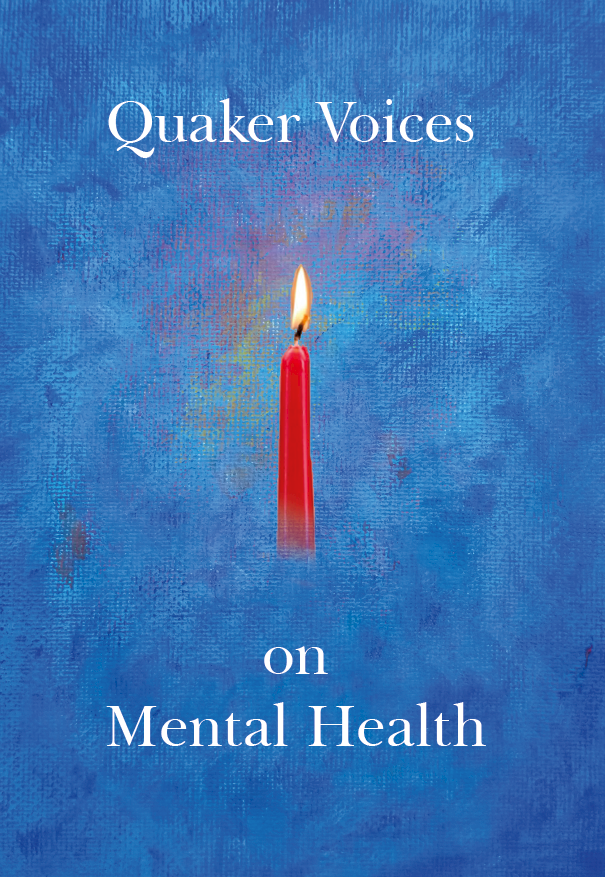
The purpose of the book is to bring before Friends the urgent need for a renewed focus on mental health within the work of Britain Yearly Meeting. The book is a series of twelve chapters written by Friends for Friends, on different Quaker perspectives of mental health. The aim is to raise awareness within the Society about current mental health issues and their relevance to us as Quakers today. All four hundred and thirty-nine Local Meetings in Britain Yearly Meeting have been sent a free copy.
Publication of the book has been supported by grants from the Quaker Mental Health Fund and The Sessions Book Trust.
A free eBook version is available for download here: QVoMH book
Now that ‘Quaker Voices on Mental Health’ is available free online, setting up a Meeting Study Group is easy. Each participant can download the book, and there is no need for everyone to have an actual copy.
Maybe choosing a chapter at a time depending on what is most relevant for your group, the following questions might be useful to get a discussion going.
1. What were your first impressions on reading this chapter?
2. Share things you found helpful, for you personally or for anyone you know. And were there any things you found unhelpful?
3. Are there messages here, for your Local Meeting or your community?
As well as offering new perspectives and information, the aim is to support Friends in talking more about mental health; for themselves, their meetings, and society in general. We hope Friends of all ages in Quaker meetings will find it useful.
Scroll down for more information about each of the twelve chapters.
The Quaker Bookshop, 173 Euston Road, London, GB NW1 2BJ
Phone+44 20 7663 1030
Website: The Quaker Bookshop
Also available from Amazon.
Chapter 1: The Tuke family’s contribution to mental health and its relevance today, by Mike Wash
Mike’s perspectives in this chapter about the Tuke family are both historical and reflective. The chapter describes how, starting in the eighteenth century, generations of the Tuke family from William onwards responded to the need for better mental health with ground breaking and innovative Quaker initiatives. These were followed by further developments for mental health in the nineteenth and twentieth centuries. The chapter continues with more Retreat history in the twenty-first century, ending with a moving reflection on the question: “As Quakers, are we doing enough?”
Chapter 2: Honouring Dark and Light, by Beverley Smith and Mark Lilley
This chapter is based on the personal testimonies of Bev and Mark given to the Quaker Voices on Mental Health Forum in Manchester in the autumn of 2024. They speak about living with their own mental illness in ways that encompass both dark and light, which was the theme of the event.
Chapter 3: Mental health and wellbeing from birth, by Rosemary Roberts
Does effective advocacy for mental health in the twenty-first century involve acknowledging the importance of the years from birth to three? In this chapter Rosemary outlines the evidence, and suggests many opportunities for parents, families and friends - and Quakers - to enjoy their time with the youngest children, laying solid foundations for their life-long mental health.
Chapter 4: Growing up Quaker, by Moya Barnett and Max Kirk
In this chapter Moya and Mark describe their experiences of growing up Quaker, and the impact on their lives now. While these two accounts may be far from typical of the experiences of most children and young people belonging in our meetings now, they offer inspirational glimpses of what it can mean to be a young Quaker today.
Chapter 5: Nurturing mental health in school communities, by Angela Greenwood
Angela writes here as a Quaker with long experience of working in schools, often with the most traumatised and vulnerable children. From her perspective of the need for deep understanding and nurture, she advocates a relationship-based approach and offers a range of suggestions for ways of responding and staying calm.
Chapter 6: Mental health and youth work: navigating risk and resilience, by Jonathon Baynham
This chapter, written by Quaker youth worker Jo, describes the current mental health crisis among young people, and how things have changed radically and rapidly in the last few years. The importance in youth work of balancing risk and resilience is emphasised, followed by the potentially disastrous effects of the internet and phone use on teenagers. How can parents and youth workers respond?
Chapter 7: Food and Flourishing: connected eating for Friends, by Lucy Aphramor
Lucy brings a heady mix of complex ideas and interactions to these thoughts on mental health and eating, for Friends. From her perspective as a radical dietitian, she challenges so many of our assumptions about food; about our unhelpful propensity for binary thinking; and the many inequitable healthy eating messages with which we live now. The chapter continues with a wide range of suggestions about what Friends can do to ensure that our radical hospitality is inclusive.
Chapter 8: Gardens and mental health, by Zillah Scott
In this chapter Zillah writes about the benefits of gardening on health in general, and on mental health in particular. A fascinating history of gardening is followed by a well-referenced discussion of why gardens benefit our mental health. Since many Quaker Meeting Houses are set in beautiful gardens, we already have tools to enhance the mental health of those in our Meetings; to enjoy the spiritual aspects of our gardens; and to consider how we might share them with the wider community.
Chapter 9: Supporting Friends living with dementia, by Sheila Preston and Eddy Knasel
Beginning with some helpful definitions of dementia, this well-researched and wise chapter from Sheila and Eddie tells us about the importance of ‘personhood’; about living well with dementia and the experiences of some Friends. Bringing the subject ‘home’ for us, it helps us with how we might make our Meetings more dementia-friendly.
Chapter 10: Mental health and the law: things should be better …… by Alison Mitchell
In this chapter about mental health and the law, Alison takes us on a deeply thought-provoking exploration of some consequences of the law as it stands. We are invited to reflect on ways that things could be better: in relation to early intervention, to the impact of social factors, and to how mental health services respond. And we are challenged as to what our specifically Quaker response to such consequences might be, with the question: “What is our Quaker ministry on mental health?”
Chapter 11: Quaker voices on mental health behind bars, by seven anonymous contributors
Chapter 11 is a collaboration involving seven Quaker voices whose identities and locations are necessarily confidential. The seven voices are those of four prison residents and three prison chaplains who support them. The chapter is mainly conversations in response to a series of questions about mental health and the ways in which these prisoners are navigating custody at different stages of their sentences. The chapter ends with an arrestingly powerful image.
Chapter 12: Promoting mental health for family and friends of those who are mentally ill, by John Miles
This final chapter by John contains an extraordinary family story, followed by revealing accounts of the kinds of things that can happen in a family as it absorbs the impact of living with mental illness. The six Care Pathways with which the chapter ends may constitute lessons to us all. They help us most effectively to think about ways to support Friends in our Meetings who are living, day after day, year after year and decade after decade, with mental illness in the family.