In 1790 Hannah Mills, a Leeds Friend, was admitted to the York Asylum where she was refused visits from the local Quakers and died shortly afterwards. These events appear to have been the catalyst for the idea of creating a place where Quakers could be cared for according to their beliefs and by their own people.
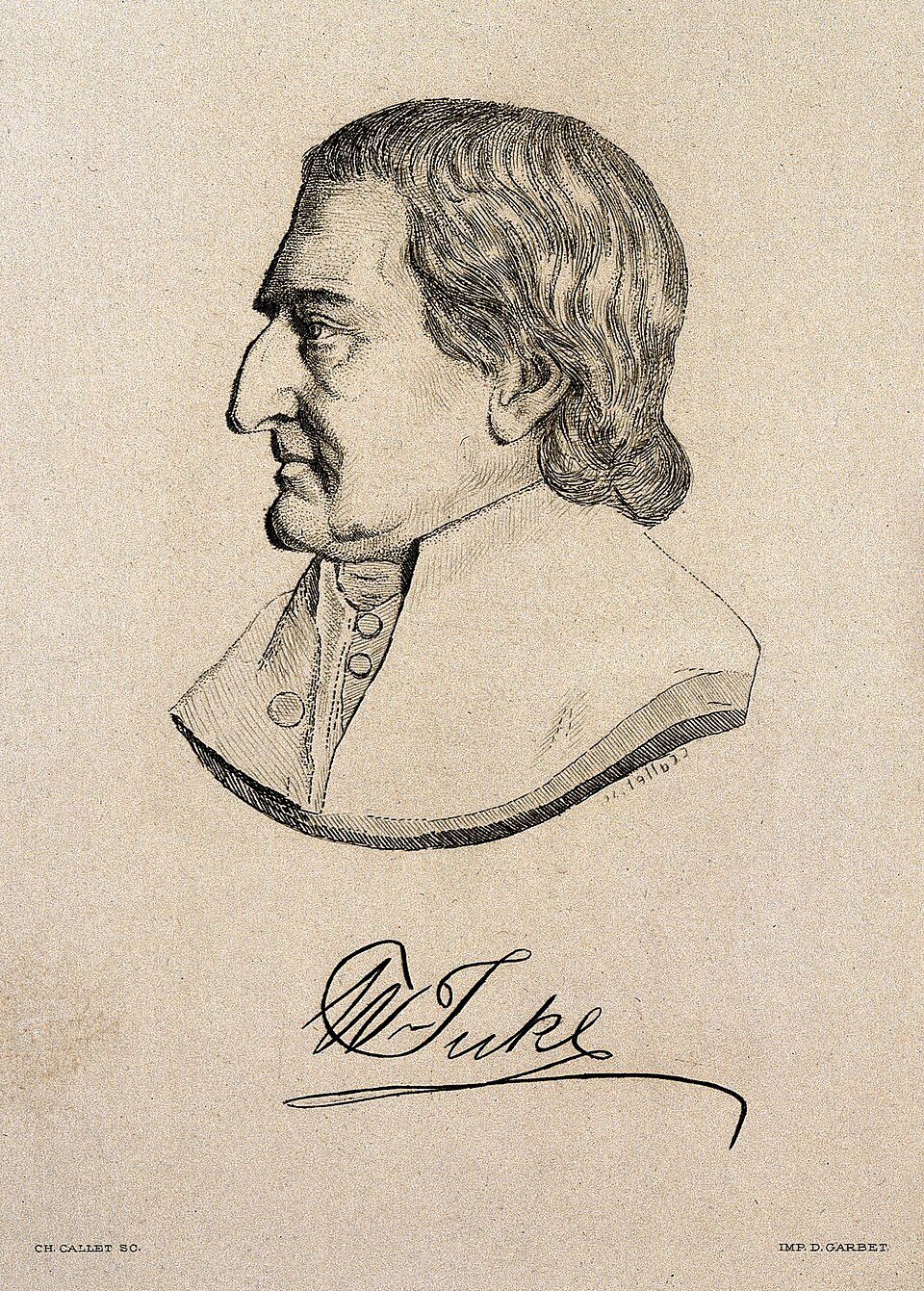
William Tuke (1732-1822), described as a man of ‘an uncommon degree of firmness of mind’ was a Quaker and York tea and coffee merchant. He founded the Retreat in 1792 based on humanity and kindness with particular attention to the comfort of the patients. The Retreat psychiatric hospital opened in 1796.
Tuke sought to adopt common values of patients and therapists – a continuity of spiritual dimension – that became one of the important factors that created a unique and successful form of "moral therapy".
Historical background: The beginnings of humane psychiatry. (See note * below.)
Moral treatment emphasised kindness and order within an attractive environment. Pleasant pastimes, a sense of domesticity, a surrogate home and family, and occupational therapy were innovations at York. Tuke created an environment where people could:
He rejected the use of fear as a means to control behaviour, encouraged a mild tone of voice and calm use of authority and the desire for the esteem of strangers as an inducement to self-restraint. He said: “The patient, on all occasions should be spoken to and treated as much in the manner of a rational being as the state of his mind will possibly allow. By this means, the spark of reason will be cherished.”
This connection with the non-psychotic ‘sane’ aspect of a person when their way of presenting themselves is unfathomable or unacceptable is a key issue in rehabilitation psychiatry and in recovery today. It has its roots firmly at the Retreat and in the Quaker belief that there is ‘that of God’ in everyone despite their loss of reason. The emphasis on the ‘Inner Light’, that positive, spiritual, life-affirming experience at the core of every individual regardless of race, gender, age, religion, belief or status.
Susan Mitchell, Retreat Lecture, 2009
Further information on William Tuke:
* Note: The Quaker Voices on Mental Health Steering Group does not necessarily accept or endorse content on 3rd Party websites that are referenced here.